Docs
Deployment and Integration Guide
Introduces onboard, shore-side, and hybrid deployment scenarios, runtime environment requirements, and integration flows using NMEA and WebSocket interfaces.
The deployment model depends on the scenario: a single vessel values offline availability, fleet management values centralized data, and ship-to-shore collaboration requires both ends to exchange data. The three models can be combined.
Deployment models
| Model | Scenario | Notes |
|---|---|---|
| Onboard deployment | Single-vessel navigation support | Runs locally offline, with chart data and permits updated aboard |
| Shore-side deployment | Fleet and dispatch management | Centralized management of chart and voyage data for unified maintenance |
| Hybrid deployment | Ship-to-shore collaboration | Onboard system works offline and synchronizes with shore after berthing |
Runtime environment
- Operating system: Windows and Linux environments are supported, with domestic platform adaptation assessed per project.
- Hardware: sized by chart data volume and concurrent track count; the exact baseline follows the project technical proposal.
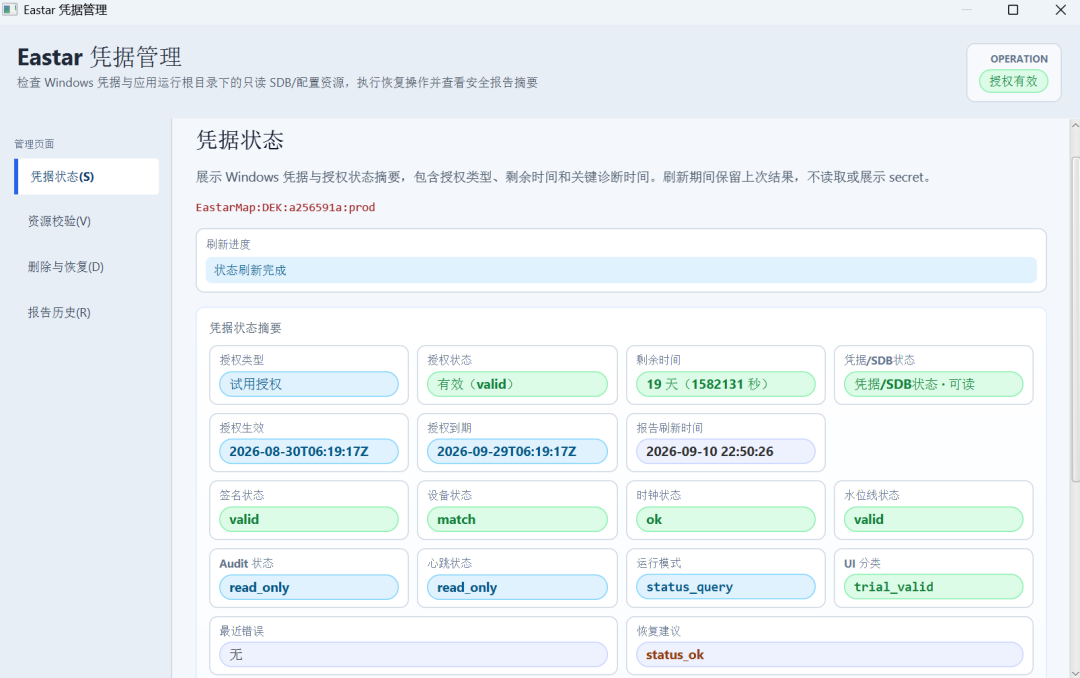
- Network: offline operation is supported, and chart data plus permits can be imported from offline media.
Interface integration
- Position and attitude input: common formats such as NMEA 0183 and NMEA 2000.
- Warning and status output: warning events and voyage status can be published over WebSocket or HTTP.
- Integration support: interface notes, field lists, and joint debugging examples are available.
Implementation flow
- Requirement confirmation: agree on vessel type, waters, data format, and warning scope.
- Environment preparation: confirm operating system, hardware, and network conditions.
- Data import: load chart data and permit files and verify coverage.
- Interface joint debugging: validate position input and warning event output.
- Trial run and delivery: adjust configuration based on the trial run, then deliver.
Specific environment baselines and interface details follow the project technical proposal agreed by both parties.
Continue Reading
东星海图 · Eastar Map
Stars above. Seas ahead.